One of the most frequent questions we get from engineers and procurement managers is: "Should I specify stainless steel or carbon steel balls for my application?" The answer, as with most engineering decisions, depends entirely on the operating environment. Let's break down the key differences to help you make an informed choice.
Carbon Steel Balls (AISI 1010, EN-31, 100Cr6)
Carbon steel is an alloy of iron and carbon. It is the workhorse of the industrial world, known for its exceptional strength and affordability.
- Pros:
- High Hardness & Wear Resistance: High-carbon grades like EN-31 (Bearing Steel) can be hardened to 60-67 HRC, making them incredibly resistant to wear and deformation under heavy loads.
- Cost-Effective: Carbon steel is significantly cheaper to produce than stainless steel.
- Cons:
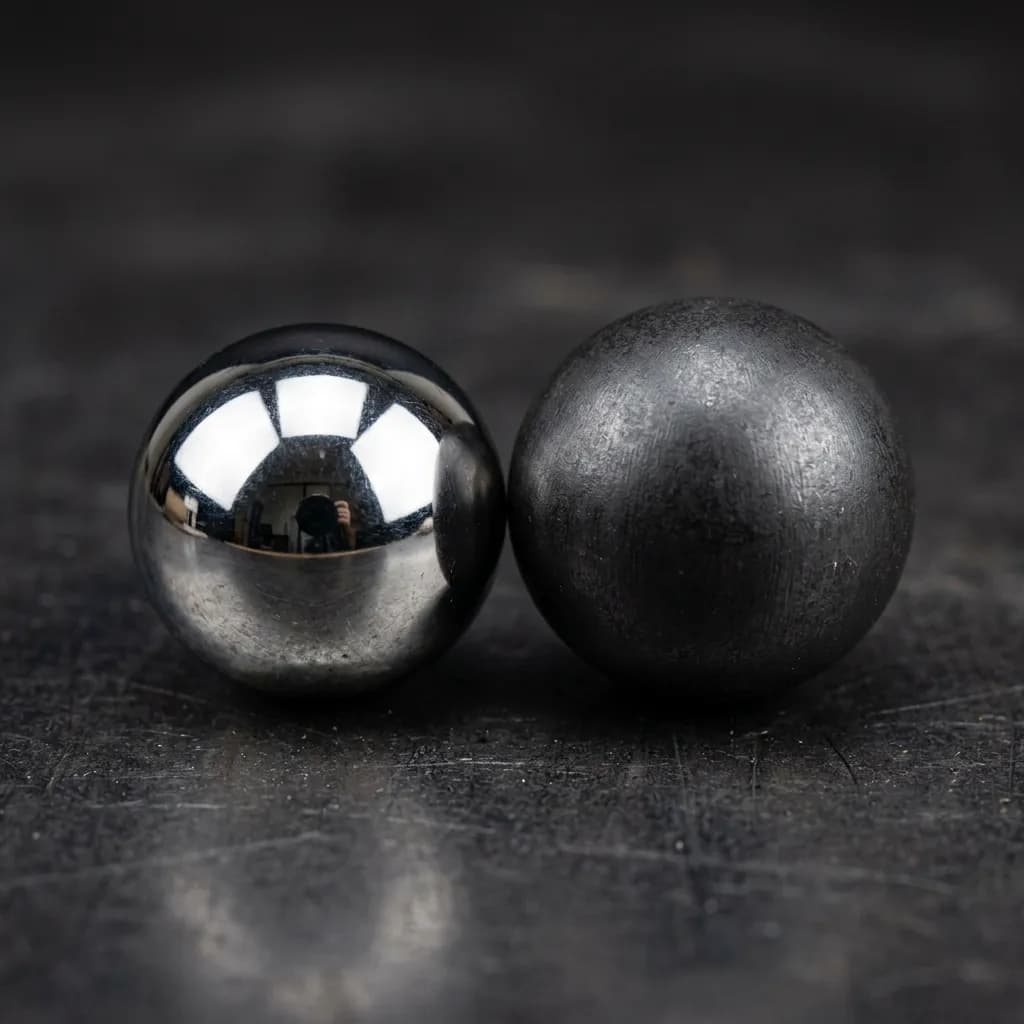
- Poor Corrosion Resistance: Without a protective coating or continuous lubrication, carbon steel will rapidly rust when exposed to moisture.
- Best Applications: Standard ball bearings, automotive components (CV joints), caster wheels, grinding media, and any application operating in a sealed, lubricated environment.
Stainless Steel Balls (SS304, SS316, SS440C)
Stainless steel contains at least 10.5% chromium, which forms a passive layer of chromium oxide that prevents surface corrosion.
- Pros:
- Excellent Corrosion Resistance: Essential for applications exposed to water, harsh chemicals, or food products. (Note: SS316 offers the best corrosion resistance, particularly against chlorides).
- Temperature Resistance: Stainless steel can withstand higher operating temperatures than standard carbon steel.
- Cons:
- Lower Hardness (Austenitic Grades): Grades like SS304 and SS316 cannot be hardened by heat treatment. They are softer than carbon steel and cannot support the same loads.
- Higher Cost: The addition of nickel and chromium makes stainless steel more expensive.
- The Exception: Martensitic Stainless (SS440C): This grade can be hardened (up to 58-62 HRC), offering a great balance of moderate corrosion resistance and high wear resistance, often used in precision bearings and valves.
- Best Applications: Food processing machinery, medical devices, marine hardware, chemical pumps, and aerosol spray cans.
The Verdict
If your application requires maximum load-bearing capacity and wear resistance in a lubricated environment, choose Carbon Steel (like EN-31).
If your application requires protection against rust, water, chemicals, or strict hygiene standards, choose Stainless Steel.
Still unsure? The experts at Rama & Sons can help you select the exact grade and size for your specific needs. Browse our full range of steel balls or contact us today for a consultation.