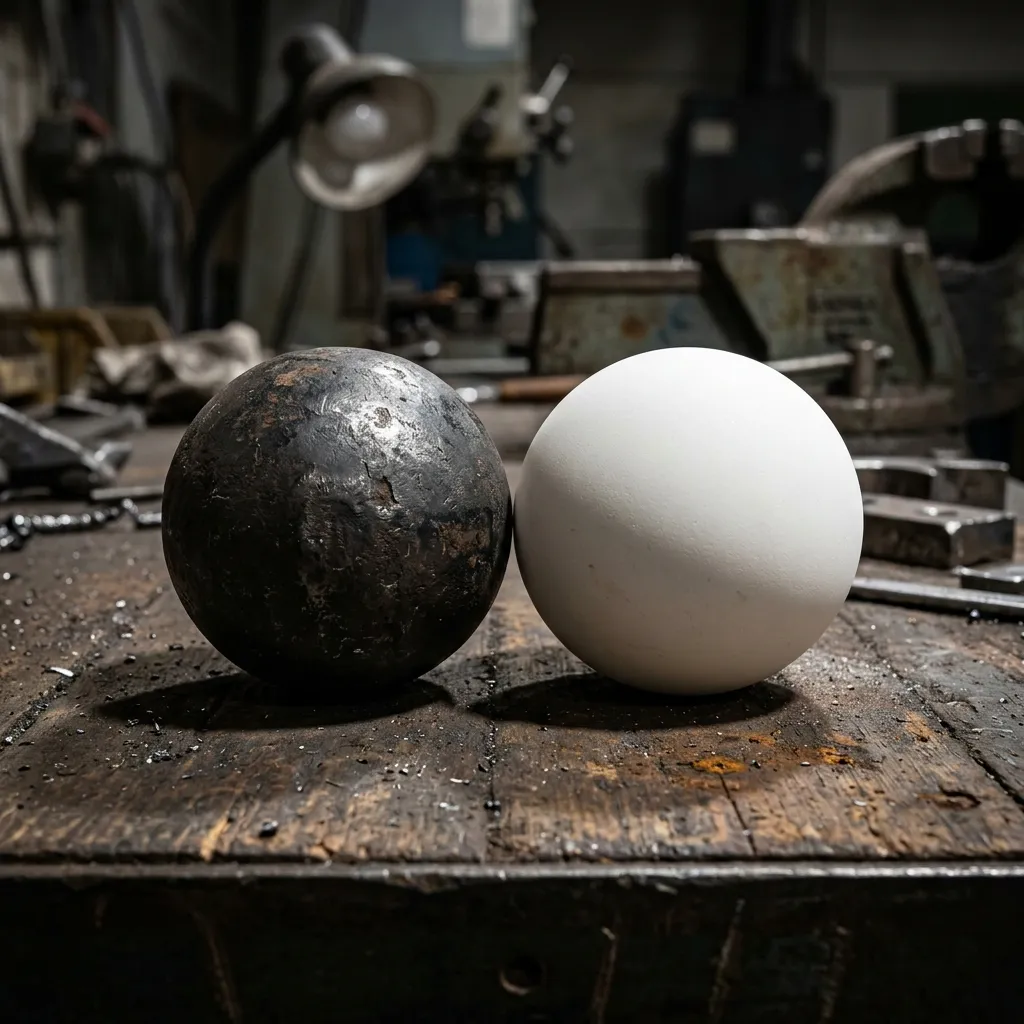
In ball milling and industrial grinding, the choice of media significantly impacts grinding efficiency, wear rates, and product contamination. Two of the most common choices are forged steel balls and Ceramic Balls">alumina ceramic balls.
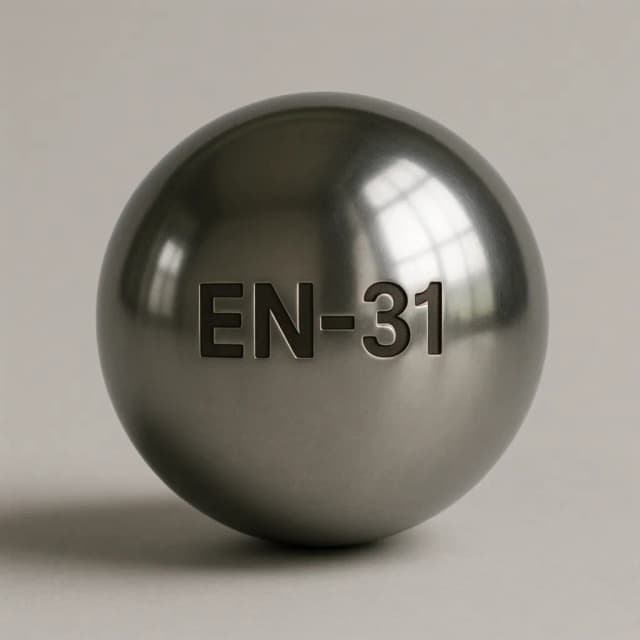
High-Carbon Steel Balls (EN-31 / Forged Steel)
Steel grinding balls are the traditional choice for cement, mining, and power generation industries.
- Advantages: Extremely high density (meaning higher impact force), excellent toughness, and lower initial cost.
- Disadvantages: They will slowly contaminate the milled product with iron, and they are susceptible to rust in wet milling applications.
Ceramic Balls">Alumina Ceramic Balls
Alumina (Al2O3) balls are a high-purity, non-metallic alternative.
- Advantages: Exceptional hardness (often harder than steel), extreme wear resistance, and zero iron contamination. They are chemically inert, making them perfect for wet milling corrosive materials or producing high-purity ceramics and white cement.
- Disadvantages: Lower density than steel (requiring longer milling times to achieve the same particle size in some cases) and higher initial cost. They are also more brittle and can fracture under extreme impact.
At Rama & Sons, we supply both premium EN-31 high-carbon steel balls and high-purity Alumina balls to meet the exacting needs of any milling operation in India and abroad.